PlantGuru concept turns “plant panic” into a clear & personalised care plan in under a minute
Consumer · Mobile · Concept
Consumer · Mobile · Concept
PlantGuru is a mobile app concept that helps people identify plants, diagnose issues from a photo, and build a care routine that adapts to their lifestyle and local weather. I designed PlantGuru end-to-end—from product strategy and UX to a polished UI system and interactive prototype.
Services
Product design · UX research · UX/UI design · Prototyping
Product design · UX research · UX/UI design · Prototyping
Team
Solo designer
Solo designer
Year
2025
2025
Challenge
Most plant apps either:
overload users with info (great content, low action), or
send generic reminders (high noise, low trust).
Through early discovery, the core problems were clear:
Diagnosis is stressful
People don’t know if a plant is underwatered, overwatered, pest-infected, or just adjusting.Care isn’t one-size-fits-all
A routine depends on plant type + environment + user habits (how often they actually care).Users need “what to do next,” not a textbook
When a plant looks sick, users want:
the likely cause
the confidence it’s correct
the next action in <30 seconds
Design goal: Build a calm, trustworthy experience that turns uncertainty into a simple plan-fast.
Solution
PlantGuru is built around one idea: make plant care feel simple and doable — spot the issue, understand it, fix it.
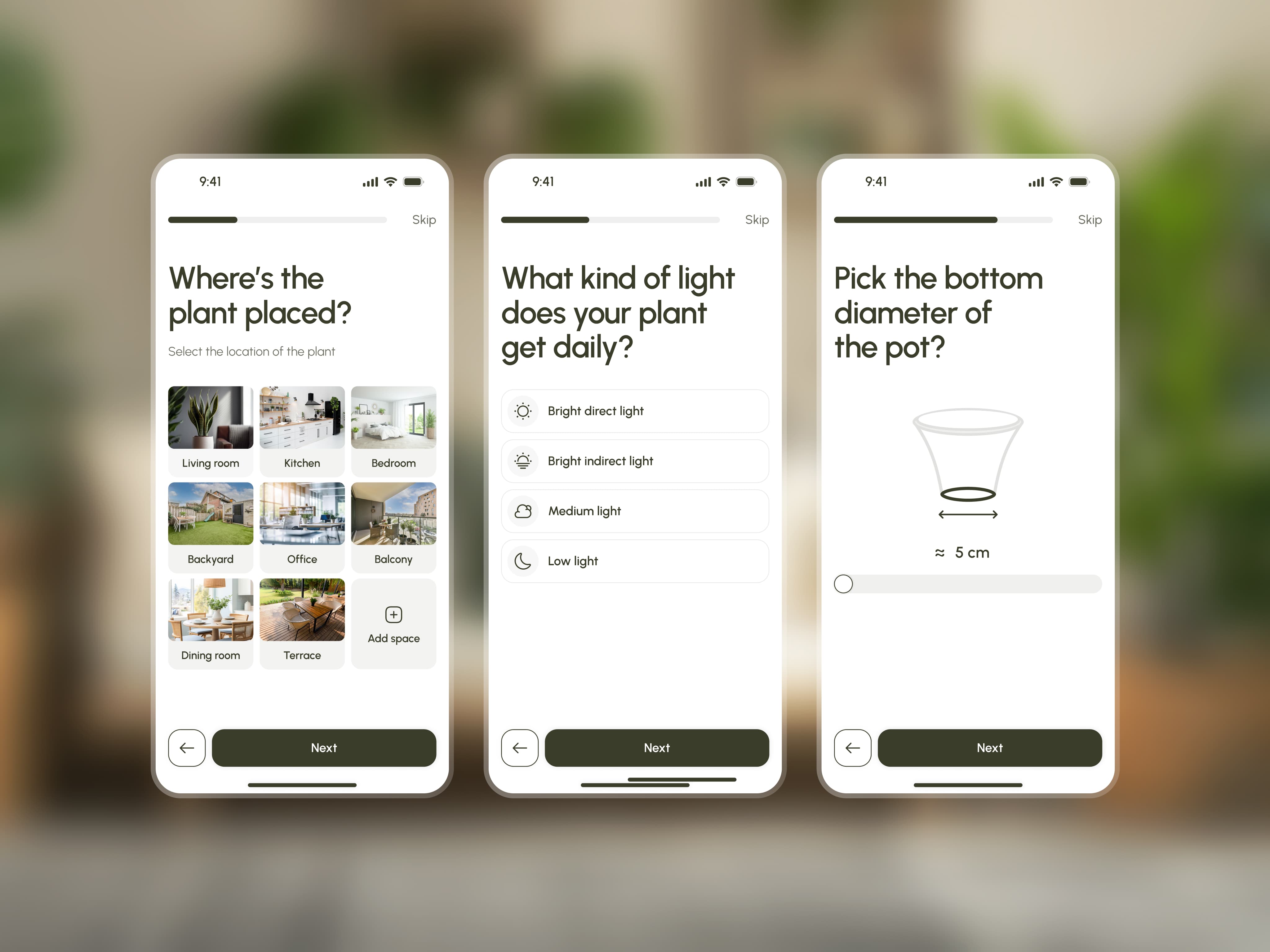
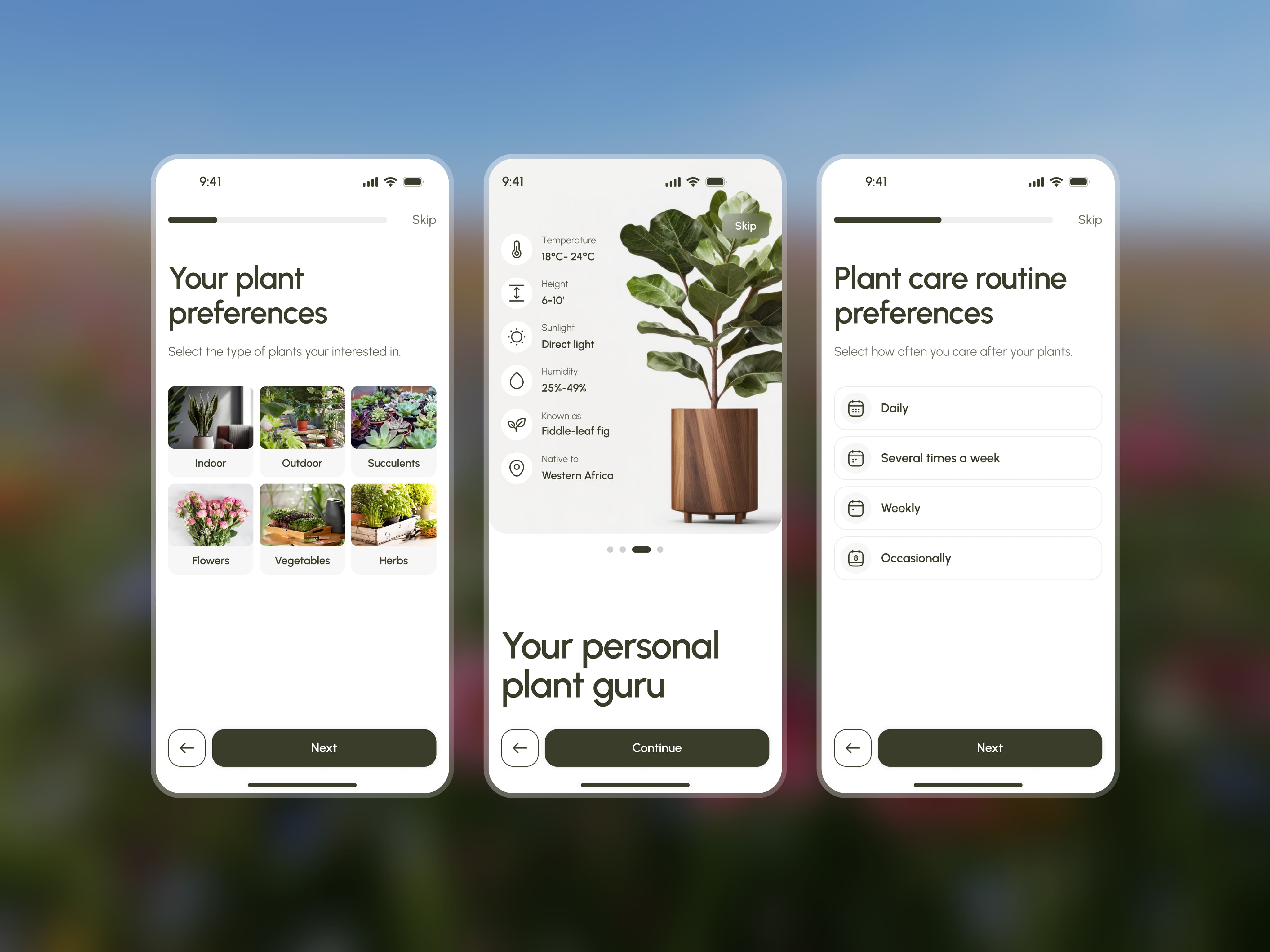
Personalised onboarding sets the basics upfront (plant interests + how often you actually care), so routines and reminders feel realistic.
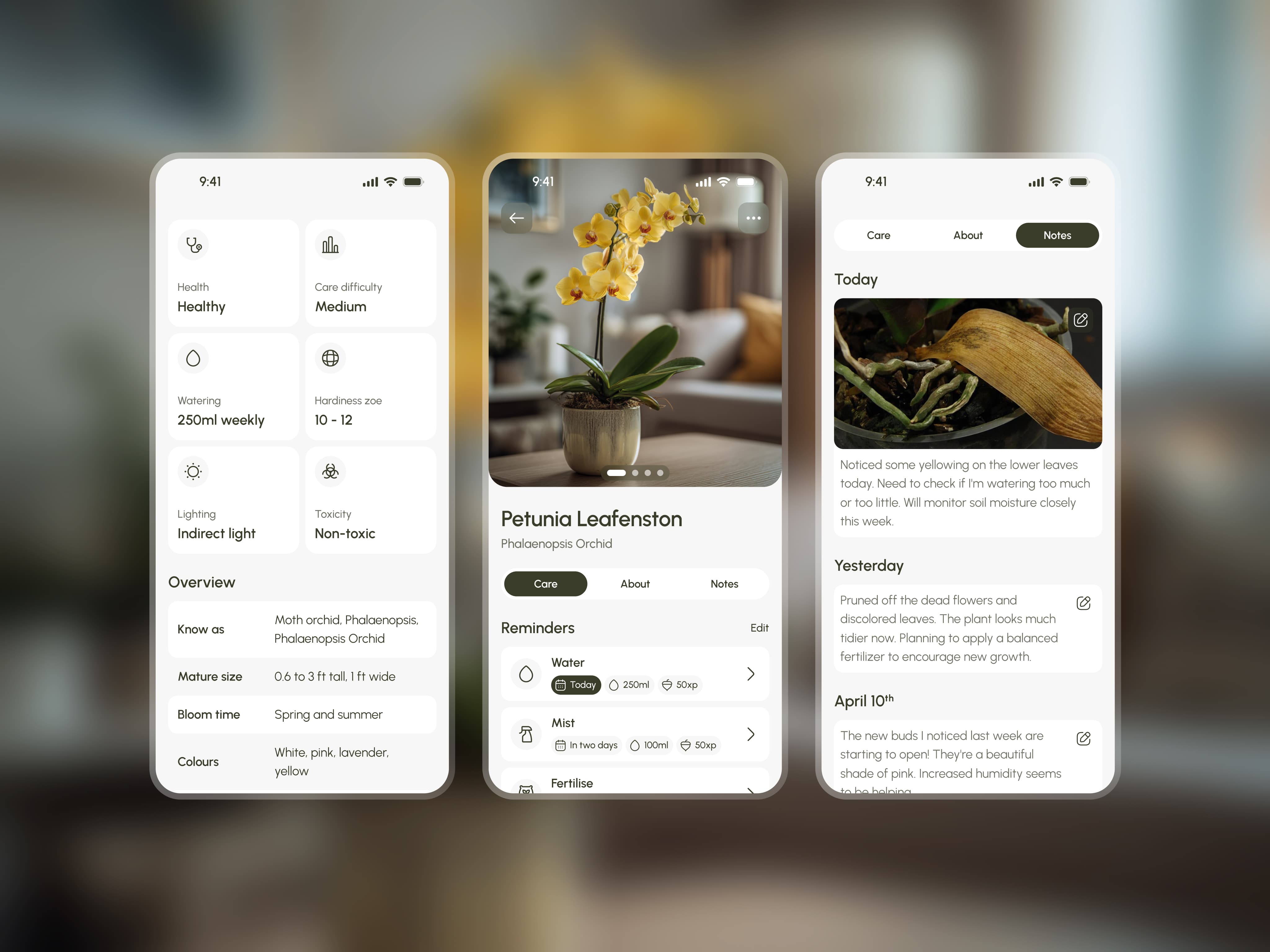
A clear plant profile turns care info into something scannable (light, temperature, humidity, size) instead of a wall of text.
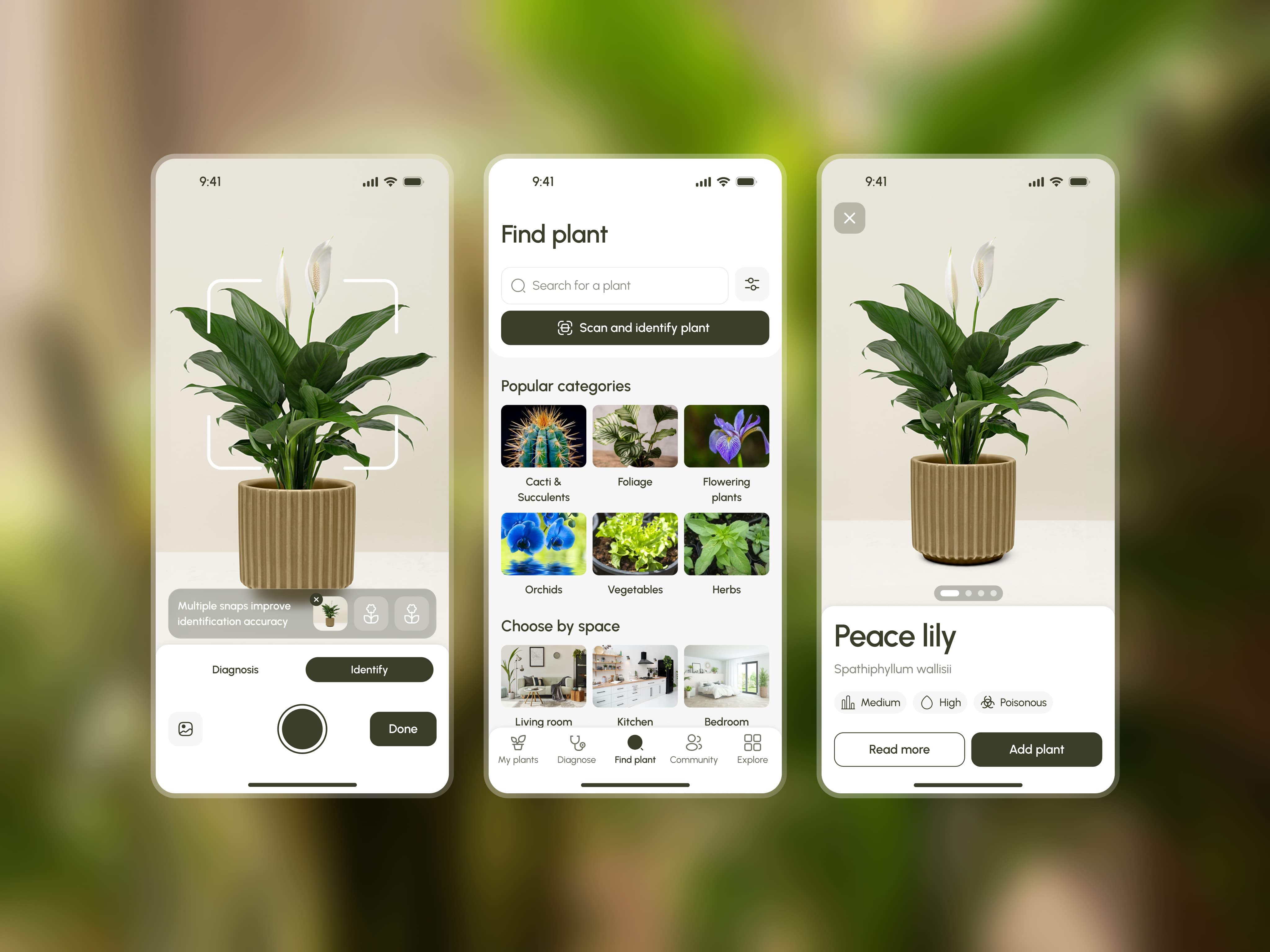
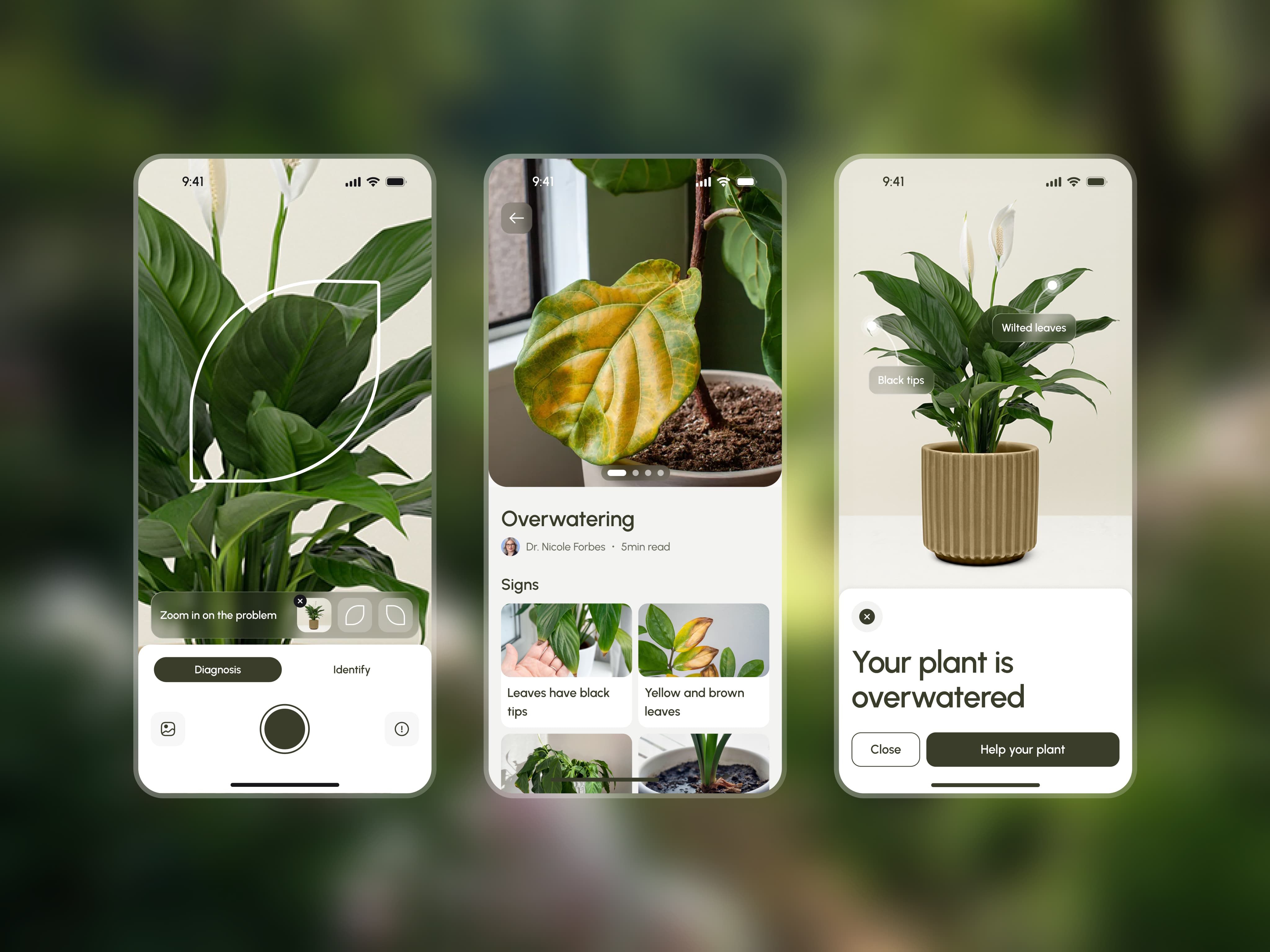
The camera-first diagnosis flow helps users focus on the problem area, then returns a plain-English result with visible symptoms (e.g., overwatering → wilted leaves, black tips) and one clear next step: Help your plant.
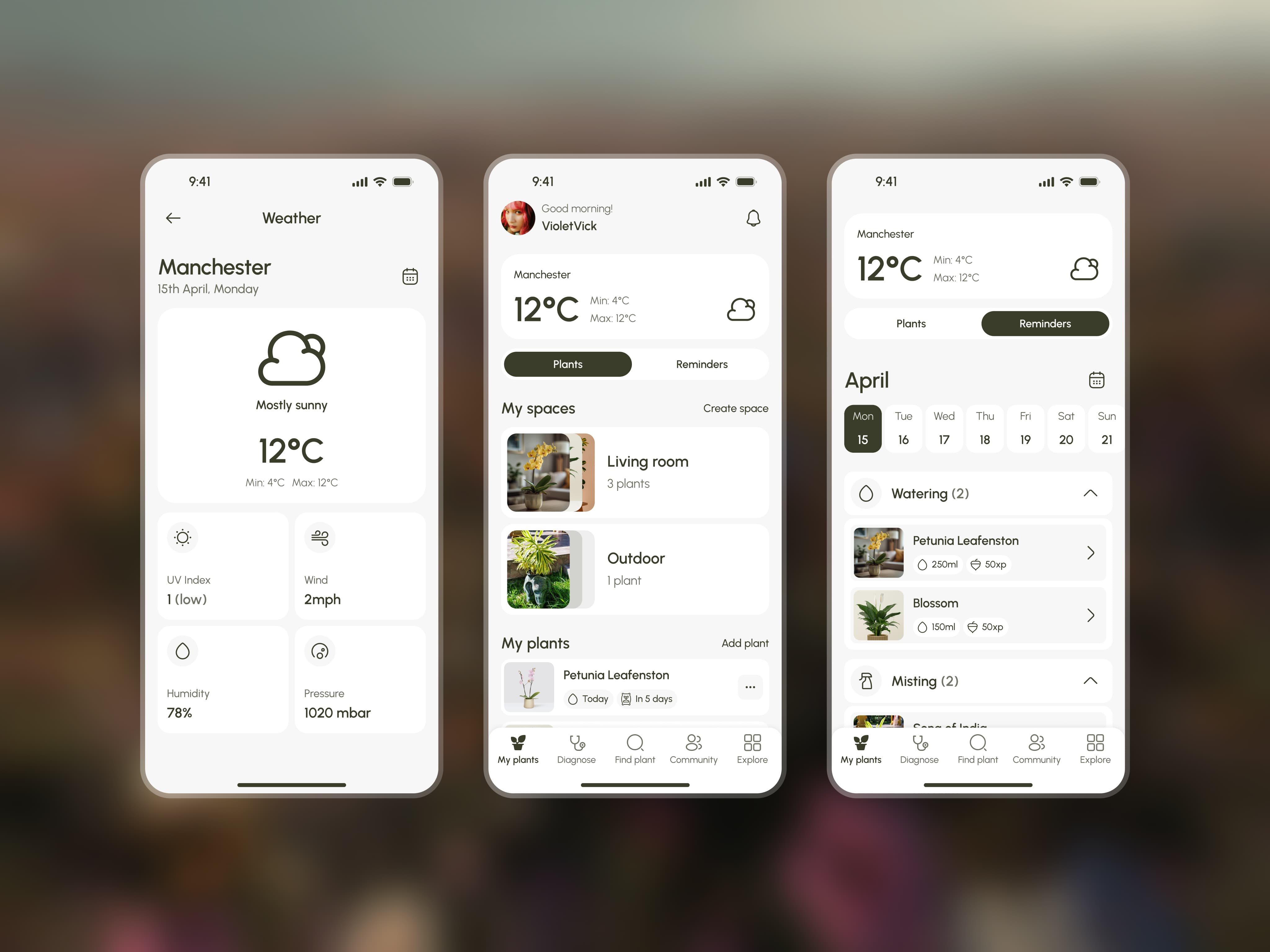
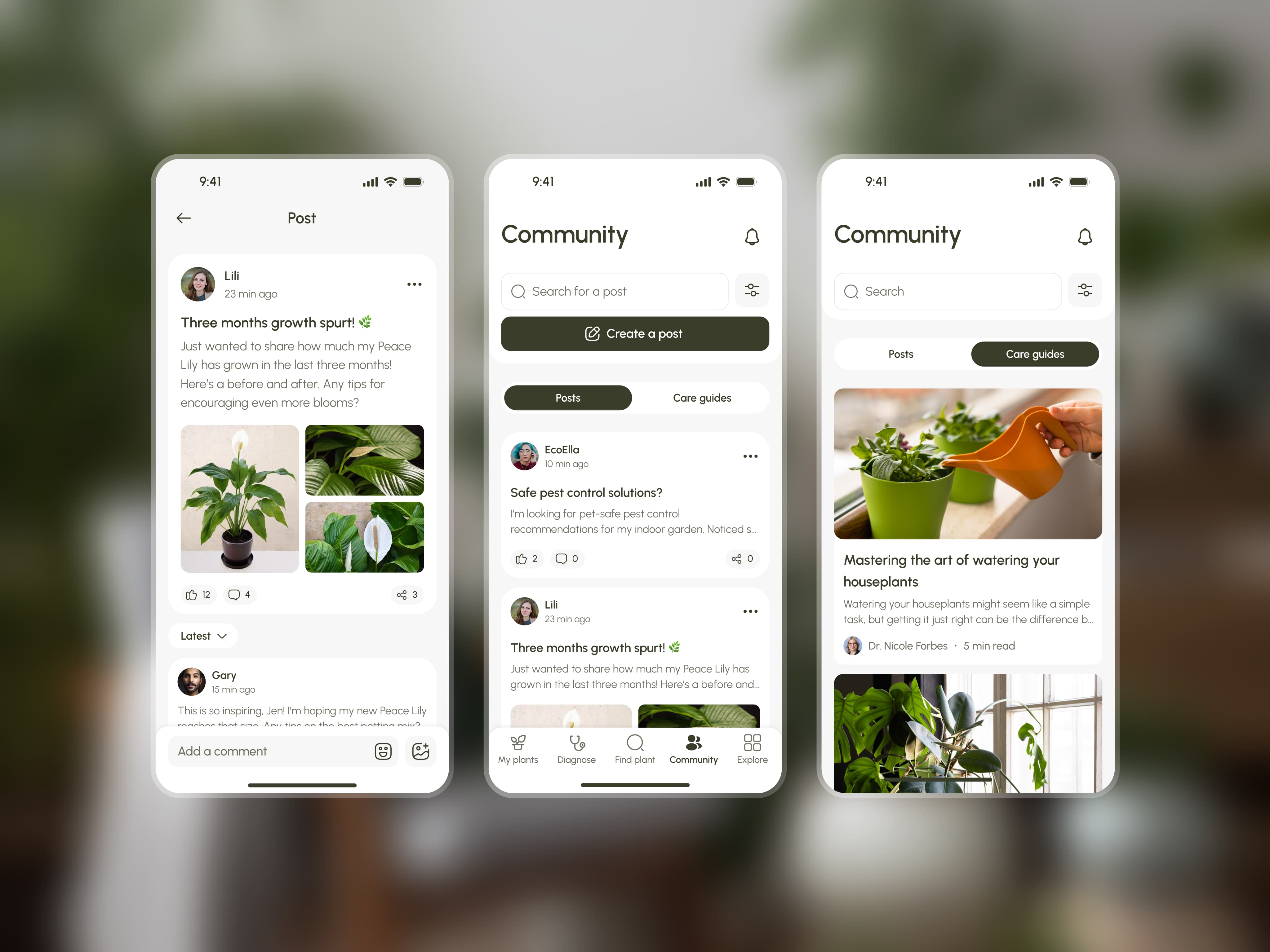
Spaces (Living room, Outdoor, etc.) keep collections organised and make care feel manageable as users add more plants.
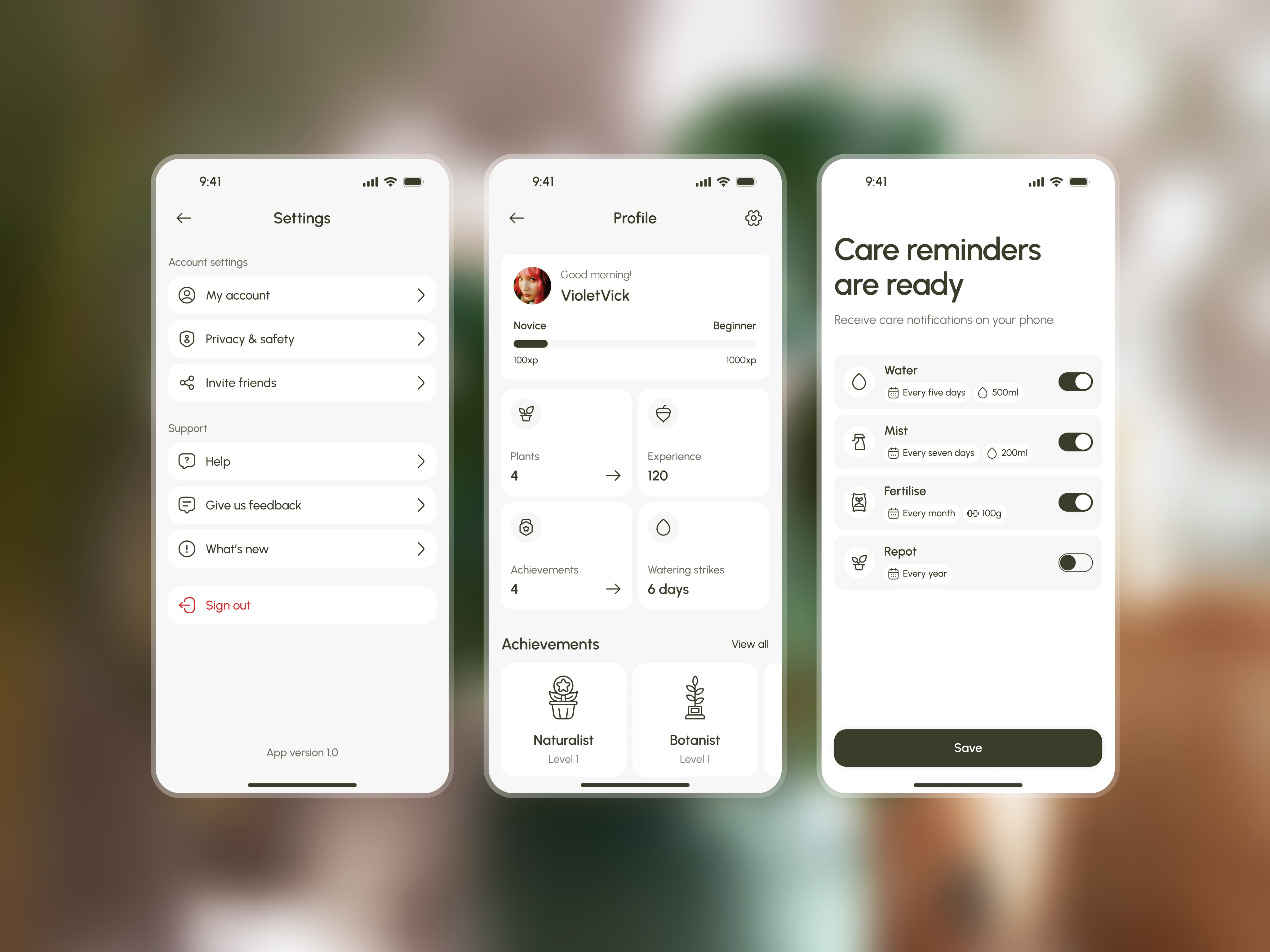
A weather-aware home + reminders view groups tasks (watering, misting) so prompts are timely and don’t feel spammy.
The UI stays calm and minimal, with a consistent set of cards, chips and lists to keep everything easy to scan.
How success would be measured
Engagement & retention (industry baselines)
D1 retention (Lifestyle): target 25–30% (benchmark ~25%).
D7 retention (Lifestyle): target 13–16% (benchmark ~13.1%).
D30 retention (Lifestyle): target 6–8% (benchmark ~5.9%).
Monetisation
Trial start rate (install → trial): target 4–7%
Trial → paid conversion: target 33–40%
Download → paid within 30 days: target 1.0–1.5% (UK/Europe)
Paying subscriber 12-month retention (monthly plan): target 10–13%
Product-specific success metrics
Time-to-value: median time from open → first diagnosis result < 60 seconds.
Activation: % of new users who add a plant OR complete a diagnosis in first session: 35–50%.
Care follow-through: weekly task completion rate for reminders (watering/misting): 25–40%.
Challenge
Most plant apps either:
overload users with info (great content, low action), or
send generic reminders (high noise, low trust).
Through early discovery, the core problems were clear:
Diagnosis is stressful
People don’t know if a plant is underwatered, overwatered, pest-infected, or just adjusting.Care isn’t one-size-fits-all
A routine depends on plant type + environment + user habits (how often they actually care).Users need “what to do next,” not a textbook
When a plant looks sick, users want:
the likely cause
the confidence it’s correct
the next action in <30 seconds
Design goal: Build a calm, trustworthy experience that turns uncertainty into a simple plan-fast.
Solution
PlantGuru is built around one idea: make plant care feel simple and doable — spot the issue, understand it, fix it.
Personalised onboarding sets the basics upfront (plant interests + how often you actually care), so routines and reminders feel realistic.
A clear plant profile turns care info into something scannable (light, temperature, humidity, size) instead of a wall of text.
The camera-first diagnosis flow helps users focus on the problem area, then returns a plain-English result with visible symptoms (e.g., overwatering → wilted leaves, black tips) and one clear next step: Help your plant.
Spaces (Living room, Outdoor, etc.) keep collections organised and make care feel manageable as users add more plants.
A weather-aware home + reminders view groups tasks (watering, misting) so prompts are timely and don’t feel spammy.
The UI stays calm and minimal, with a consistent set of cards, chips and lists to keep everything easy to scan.
How success would be measured
Engagement & retention (industry baselines)
D1 retention (Lifestyle): target 25–30% (benchmark ~25%).
D7 retention (Lifestyle): target 13–16% (benchmark ~13.1%).
D30 retention (Lifestyle): target 6–8% (benchmark ~5.9%).
Monetisation
Trial start rate (install → trial): target 4–7%
Trial → paid conversion: target 33–40%
Download → paid within 30 days: target 1.0–1.5% (UK/Europe)
Paying subscriber 12-month retention (monthly plan): target 10–13%
Product-specific success metrics
Time-to-value: median time from open → first diagnosis result < 60 seconds.
Activation: % of new users who add a plant OR complete a diagnosis in first session: 35–50%.
Care follow-through: weekly task completion rate for reminders (watering/misting): 25–40%.