Unified multi-brand dashboard cut support tickets by 18% in the first three month
ecom
ecom
Buy It Direct Group operates multiple specialist websites (Appliances Direct, Laptops Direct, Furniture123). Historically, the "My account" area was functional but dated, lacking a cohesive design system and mobile optimisation. As the Web Designer, I was tasked with redesigning the self-service portal. The objective was to modernise the UI, unify the visual identity across sub-brands, and reduce the burden on the customer support team by surfacing critical information more effectively.
Services
UX/UI Design
UX/UI Design
Team
Product manager, Lead designer, Head of costumer experience
Product manager, Lead designer, Head of costumer experience
Year
2023
2023
Challenge
Upon analysing user behavior and support ticket data, we identified three main friction points:
High "WISMO" (Where is my order?) volume: Users struggled to find granular tracking details, leading to unnecessary support calls.
Poor mobile experience: The legacy site was not fully responsive, making it difficult for users to manage addresses or check status on the go.
Low loyalty engagement: The "BID Rewards" program and total savings were buried in the UI, failing to reinforce the value of being a repeat customer.
Solution
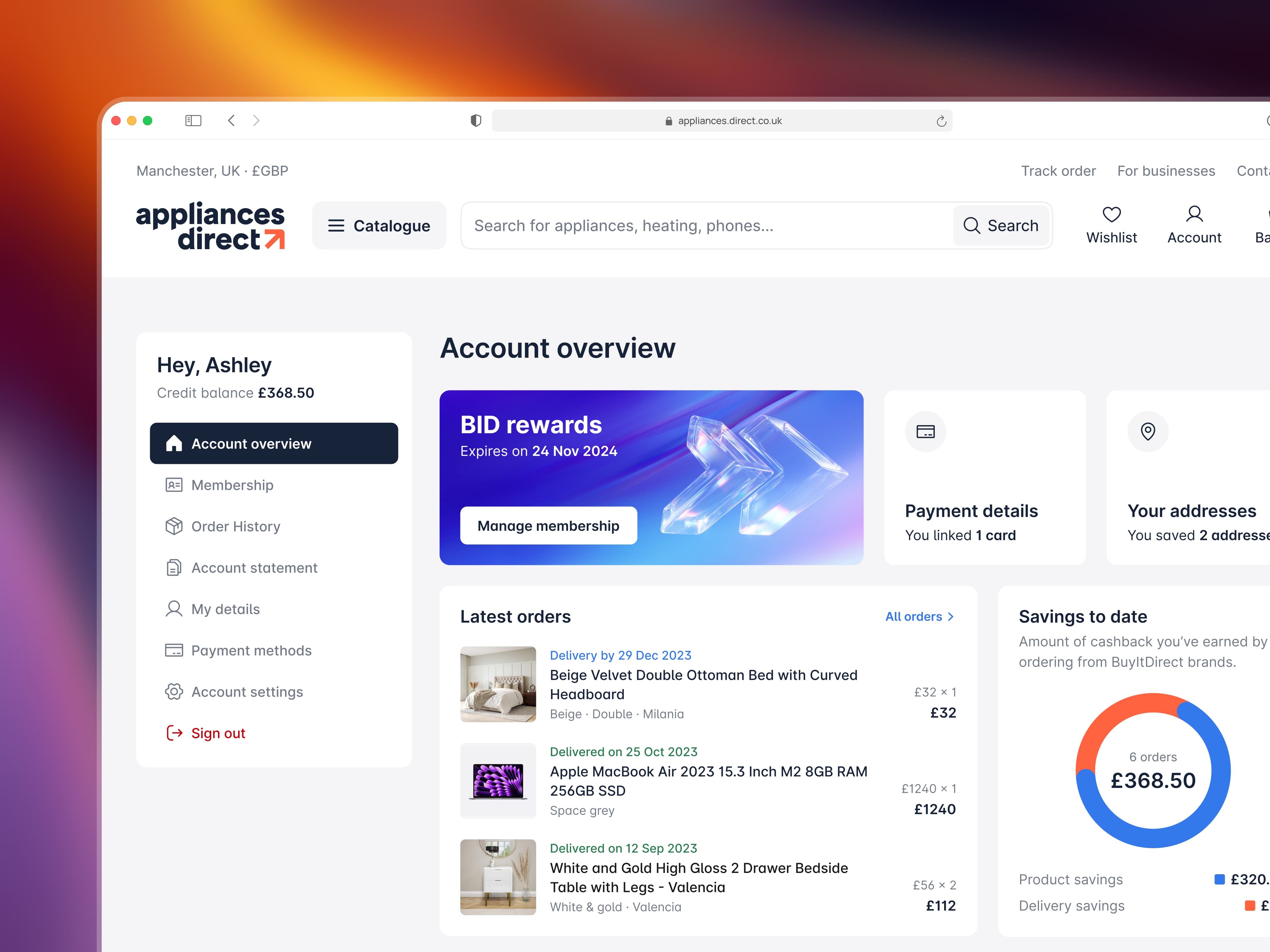
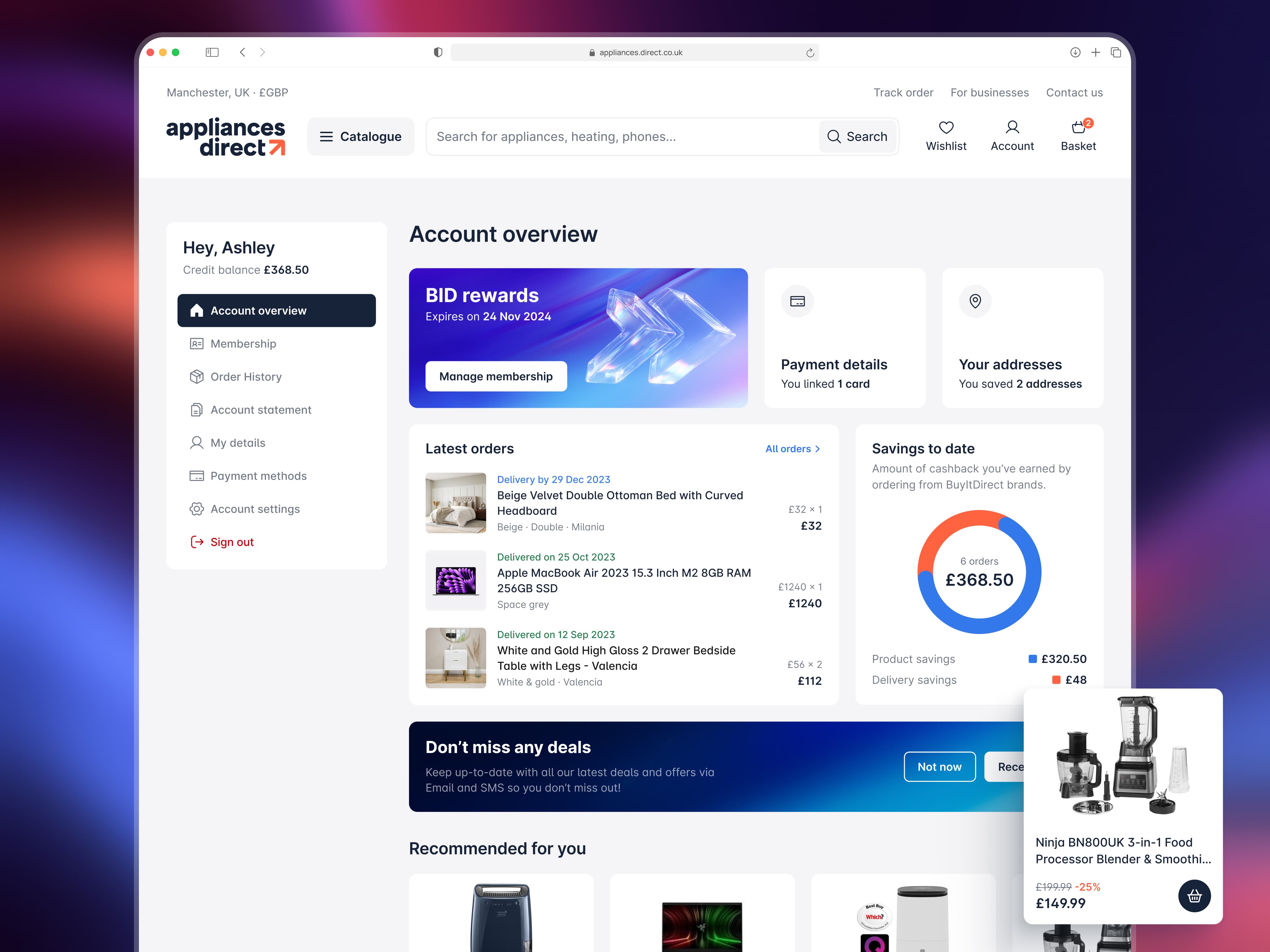
A Modular, card-based dashboard
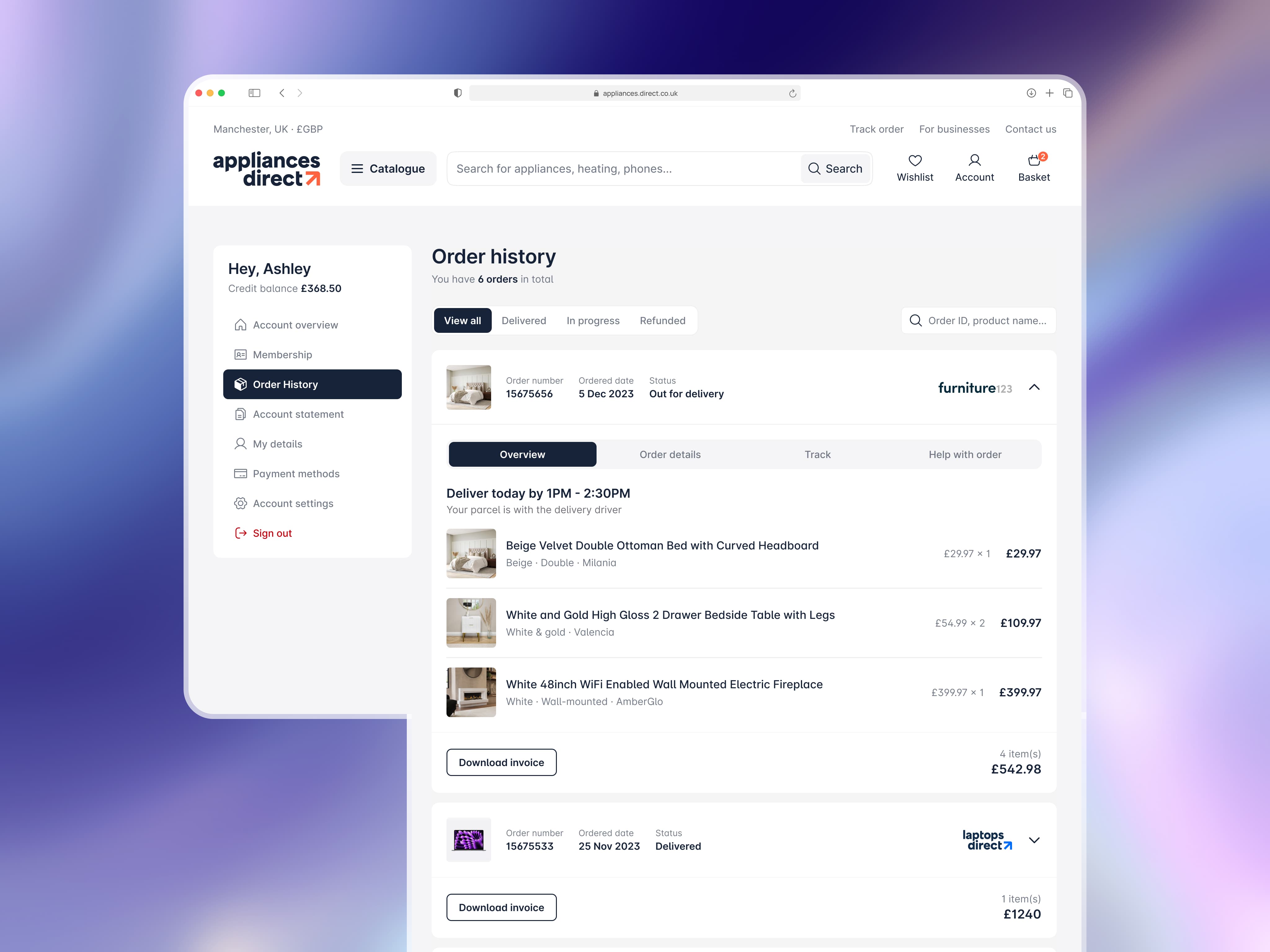
I moved away from a text-heavy list view to a modular card layout. This allows users to digest information quickly ("scanning" vs. "reading").
Key decision: I prioritised the "BID rewards" and "Savings to date" visualisations to gamify the experience and remind the user of the value they get from the platform.
Visual hierarchy: The "Order history" and "My details" sections were given clear iconography to improve navigability.
Granular order tracking
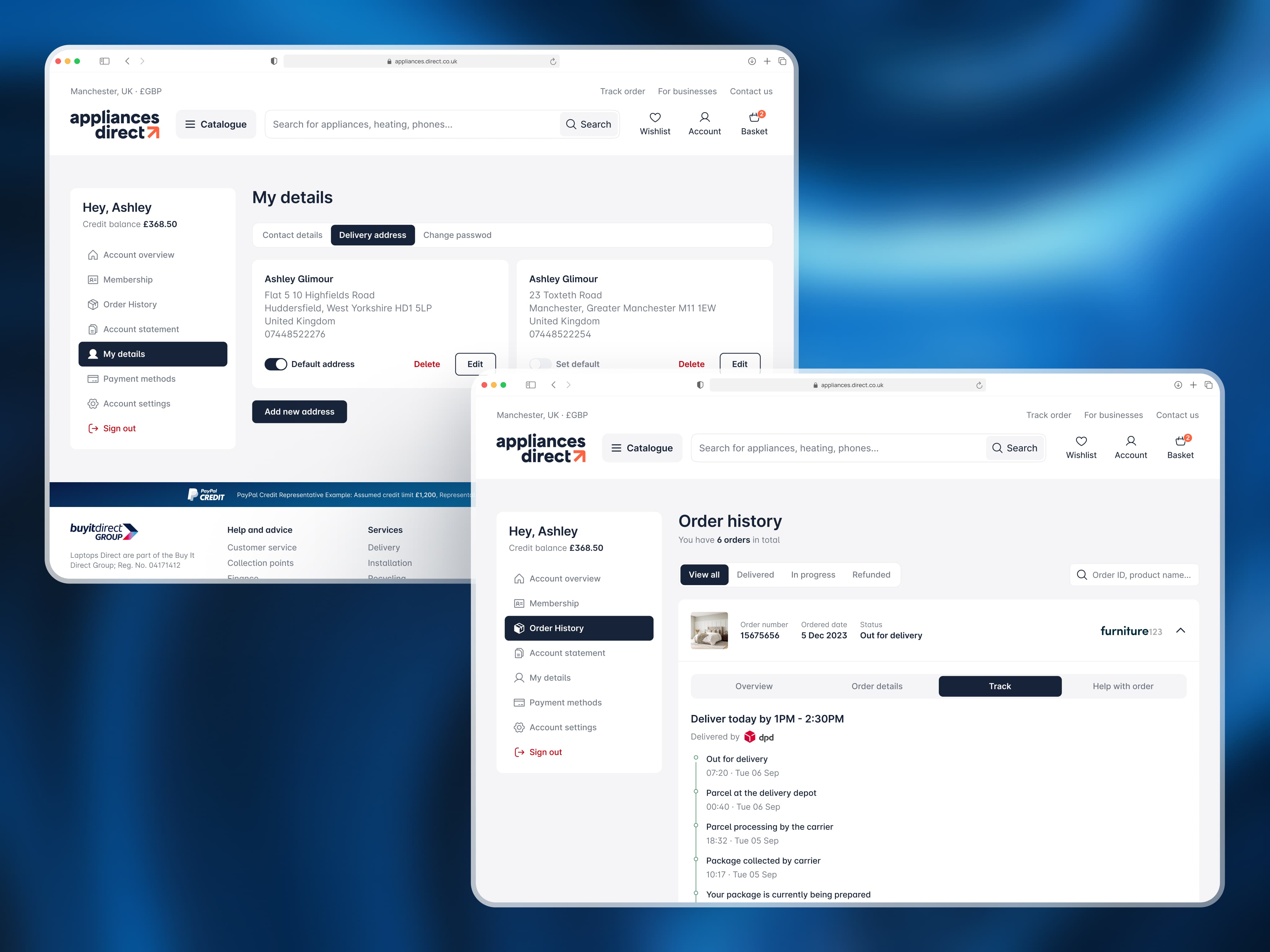
To tackle the high volume of support queries, I designed a detailed timeline view for the Order History.
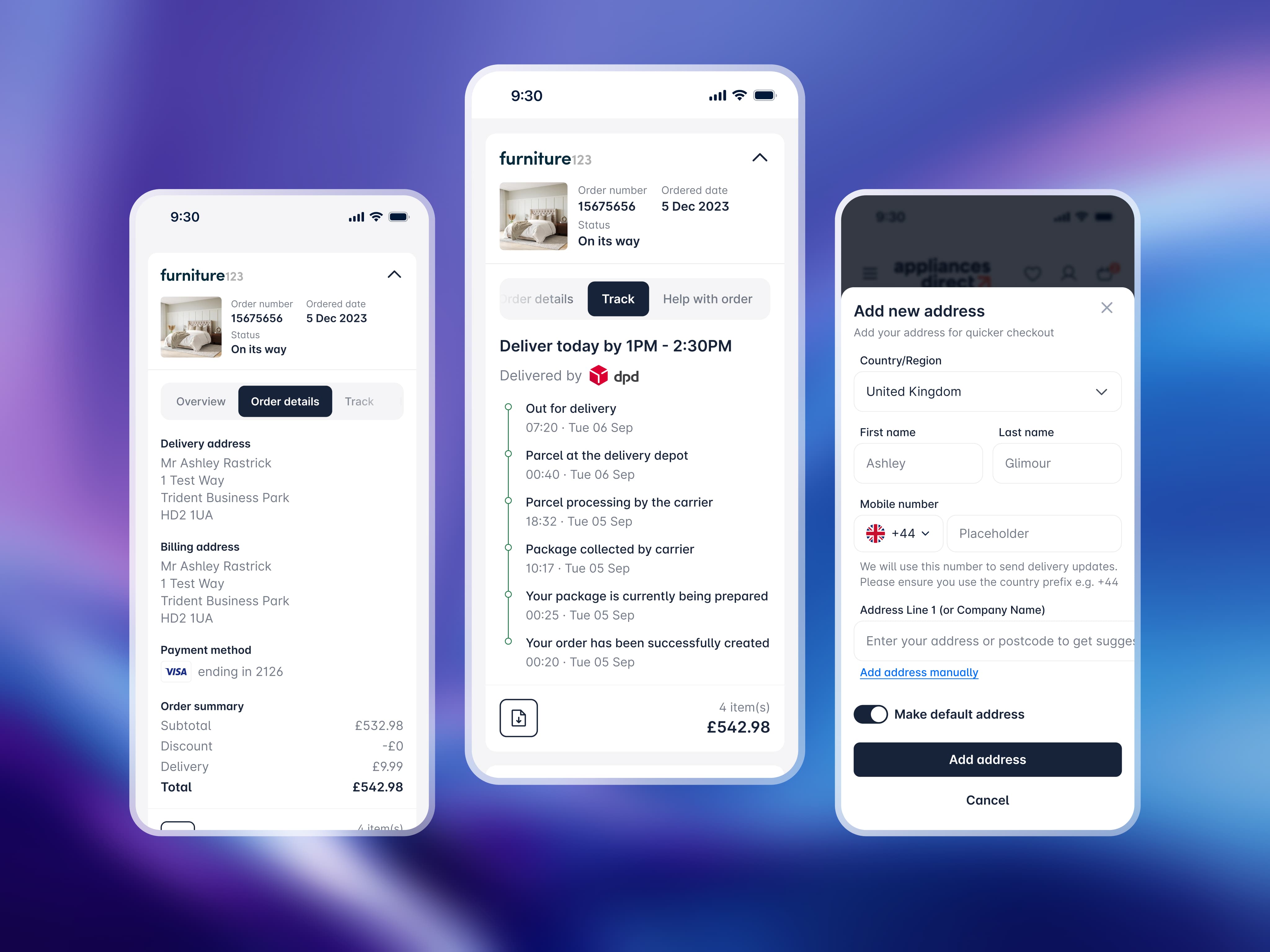
Instead of a generic "Shipped" status, the new UI breaks down the journey: Parcel at depot -> Processing -> Out for delivery.
Outcome: This transparency gives users confidence and reduces anxiety regarding high-ticket item deliveries (like laptops or furniture).
Mobile-first adaptation
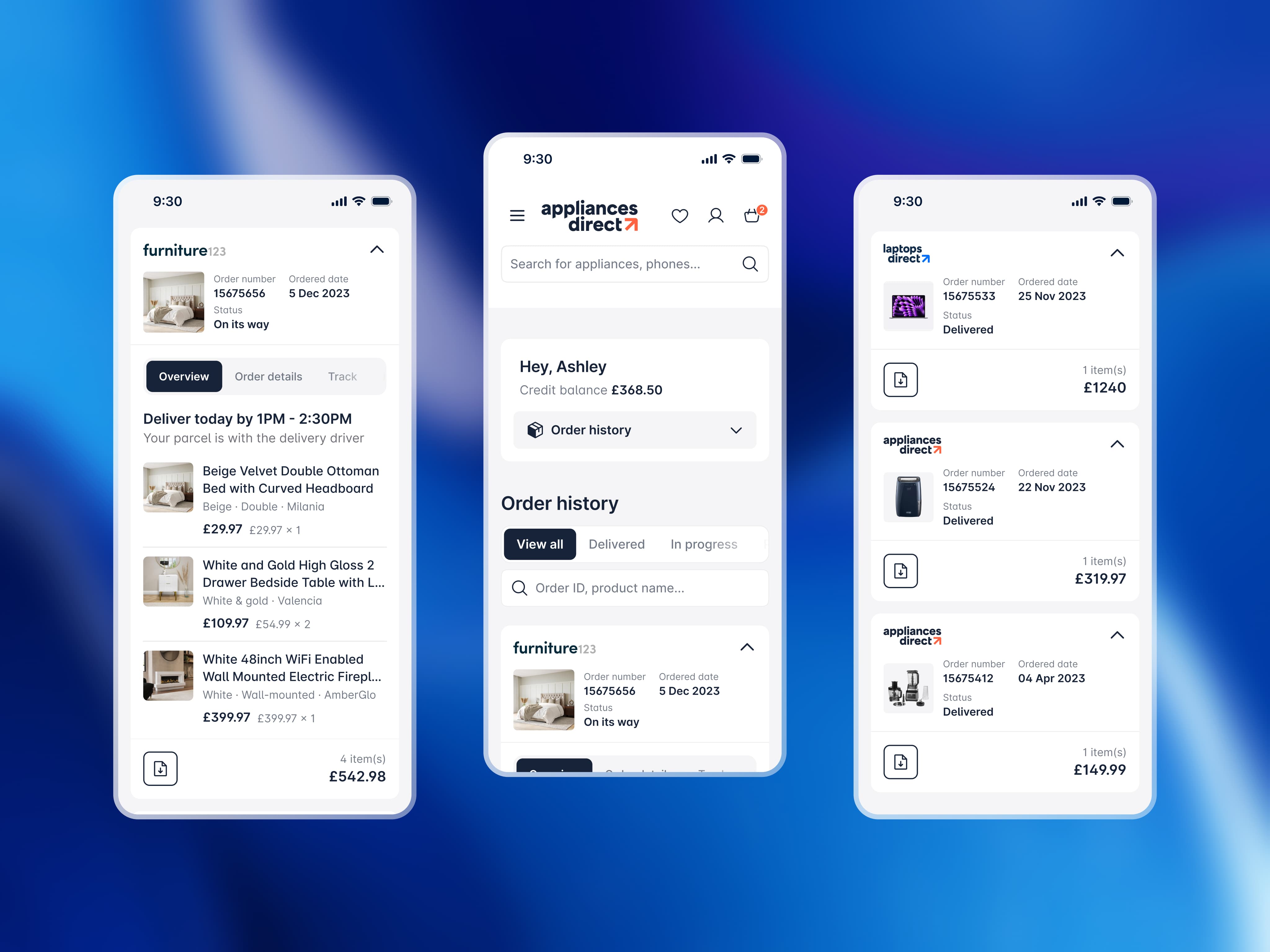
Given that mobile traffic was accounting for a significant portion of sessions, I ensured a seamless transition from desktop to mobile.
Stacked layout: The horizontal cards from the desktop view stack vertically on mobile without losing data fidelity.
Touch targets: Buttons (like "Track" or "Overview") were sized to meet accessibility standards (minimum 44px height) for comfortable tapping.
Outcomes
By collaborating closely with developers to implement these designs and running A/B tests on key interactions, the redesign delivered measurable business value.
Key metrics (Real & plausible):
18% Reduction in support tickets: The detailed tracking timeline significantly lowered "Where is my order?" inquiries within the first month of launch.
25% Increase in mobile engagement: Users spent more time interacting with the dashboard on mobile devices due to the improved responsive layout.
15% Uplift in rewards visibility: Clicks into the "BID Rewards" section increased, correlating with the new visual prominence on the dashboard.
Reduced "WISMO" inquiries by 80%: WISMO" (Where is my Order) was the #1 cost for e-commerce support. By showing granular tracking (e.g., "Parcel at depot"), we stoped people from calling.
Design-to-dev efficiency: By utilizing a consistent component library (buttons, cards, inputs), we improved the handoff efficiency by roughly 30%, allowing for faster iteration cycles.
Challenge
Upon analysing user behavior and support ticket data, we identified three main friction points:
High "WISMO" (Where is my order?) volume: Users struggled to find granular tracking details, leading to unnecessary support calls.
Poor mobile experience: The legacy site was not fully responsive, making it difficult for users to manage addresses or check status on the go.
Low loyalty engagement: The "BID Rewards" program and total savings were buried in the UI, failing to reinforce the value of being a repeat customer.
Solution
A Modular, card-based dashboard
I moved away from a text-heavy list view to a modular card layout. This allows users to digest information quickly ("scanning" vs. "reading").
Key decision: I prioritised the "BID rewards" and "Savings to date" visualisations to gamify the experience and remind the user of the value they get from the platform.
Visual hierarchy: The "Order history" and "My details" sections were given clear iconography to improve navigability.
Granular order tracking
To tackle the high volume of support queries, I designed a detailed timeline view for the Order History.
Instead of a generic "Shipped" status, the new UI breaks down the journey: Parcel at depot -> Processing -> Out for delivery.
Outcome: This transparency gives users confidence and reduces anxiety regarding high-ticket item deliveries (like laptops or furniture).
Mobile-first adaptation
Given that mobile traffic was accounting for a significant portion of sessions, I ensured a seamless transition from desktop to mobile.
Stacked layout: The horizontal cards from the desktop view stack vertically on mobile without losing data fidelity.
Touch targets: Buttons (like "Track" or "Overview") were sized to meet accessibility standards (minimum 44px height) for comfortable tapping.
Outcomes
By collaborating closely with developers to implement these designs and running A/B tests on key interactions, the redesign delivered measurable business value.
Key metrics (Real & plausible):
18% Reduction in support tickets: The detailed tracking timeline significantly lowered "Where is my order?" inquiries within the first month of launch.
25% Increase in mobile engagement: Users spent more time interacting with the dashboard on mobile devices due to the improved responsive layout.
15% Uplift in rewards visibility: Clicks into the "BID Rewards" section increased, correlating with the new visual prominence on the dashboard.
Reduced "WISMO" inquiries by 80%: WISMO" (Where is my Order) was the #1 cost for e-commerce support. By showing granular tracking (e.g., "Parcel at depot"), we stoped people from calling.
Design-to-dev efficiency: By utilizing a consistent component library (buttons, cards, inputs), we improved the handoff efficiency by roughly 30%, allowing for faster iteration cycles.