Cut time to first offer by 42% in the first three months
SASS
SASS
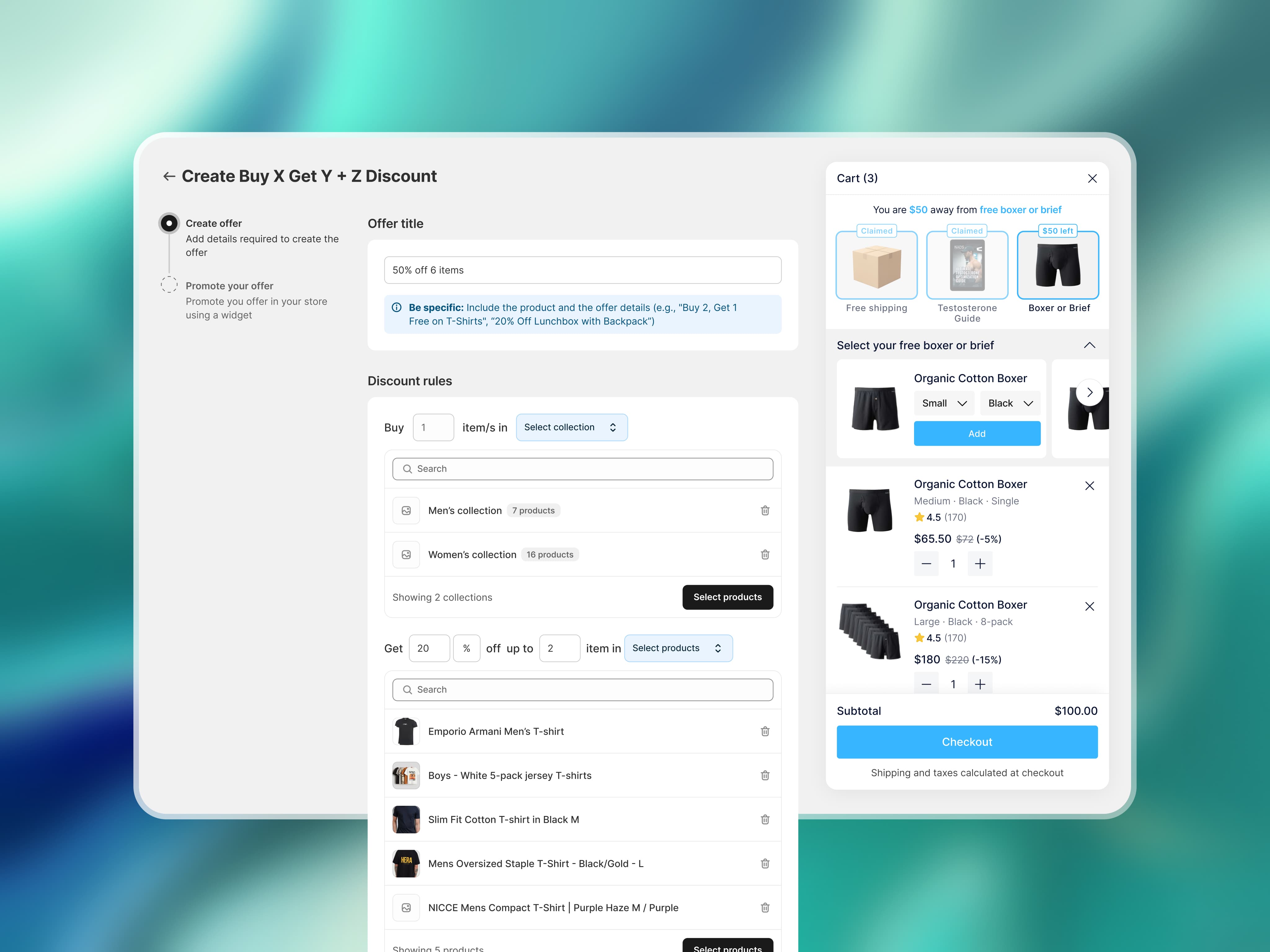
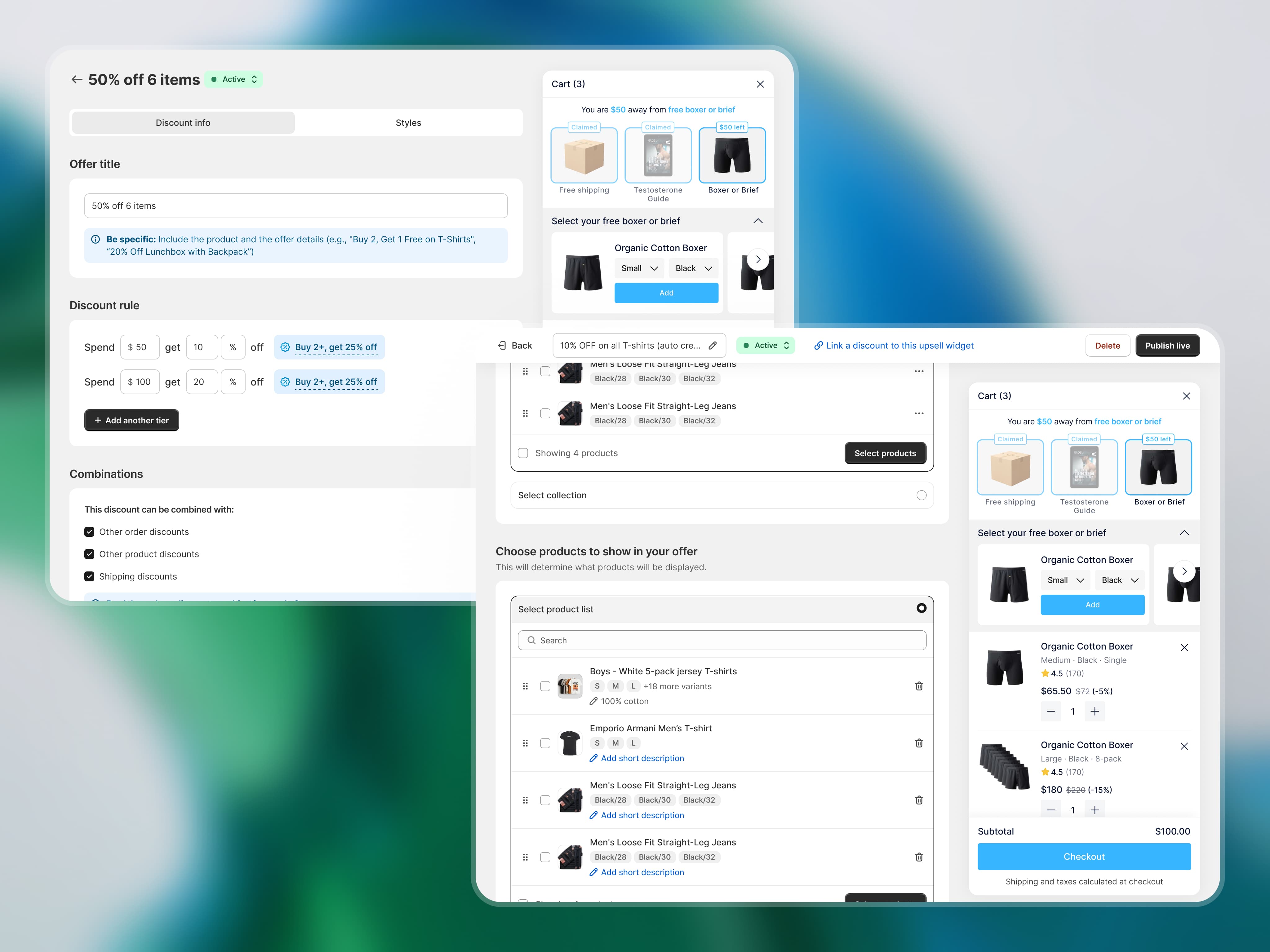
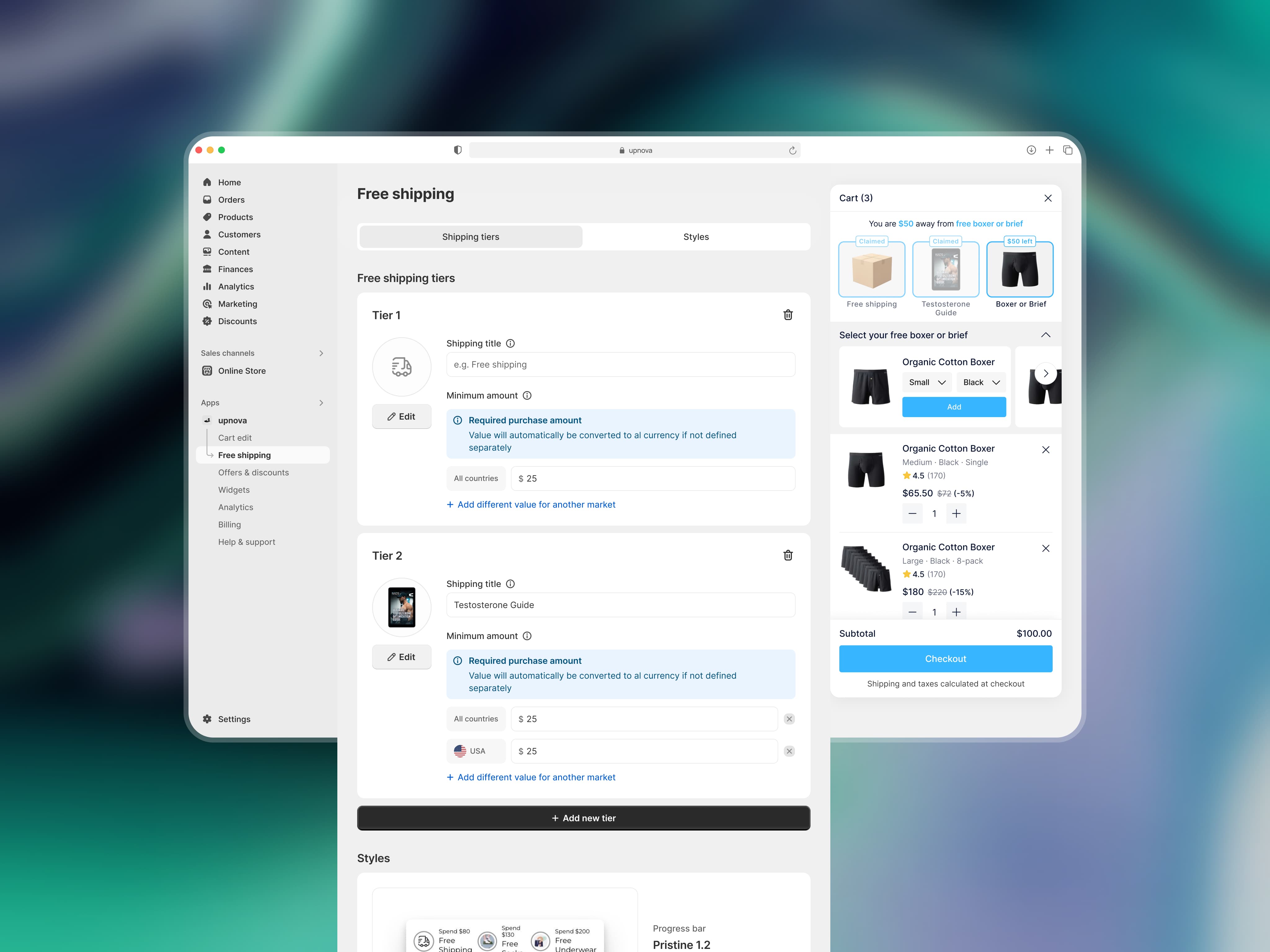
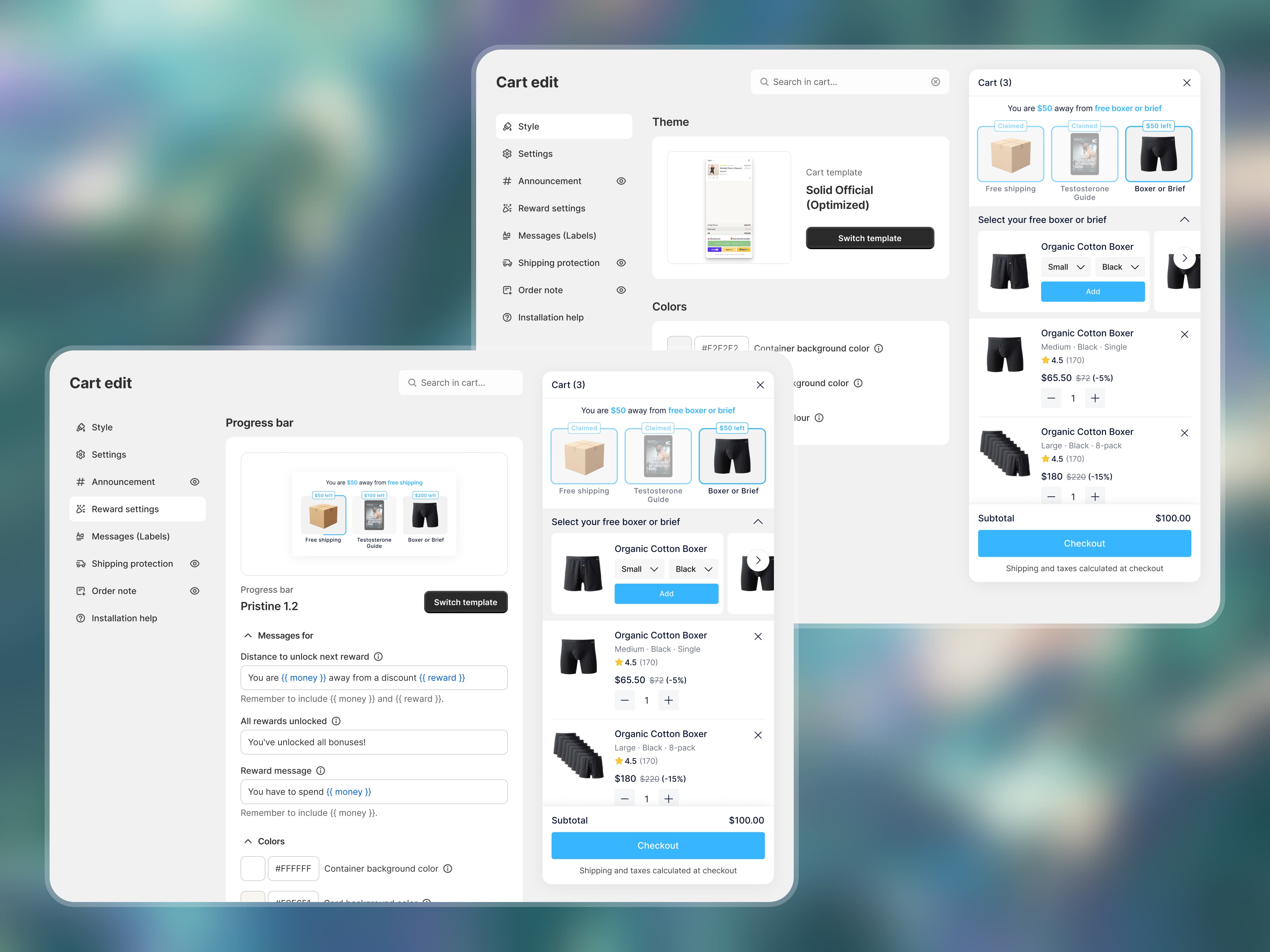
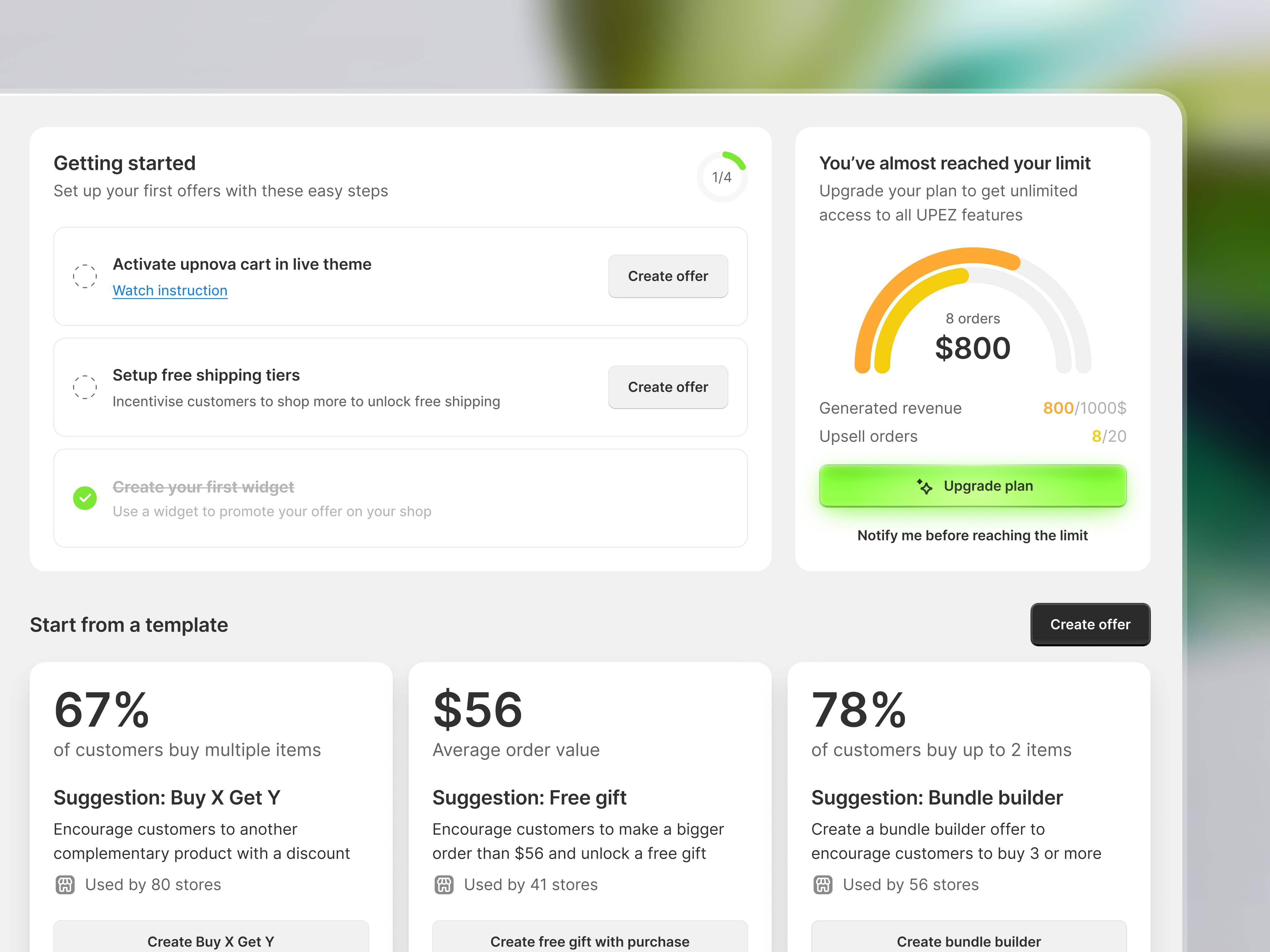
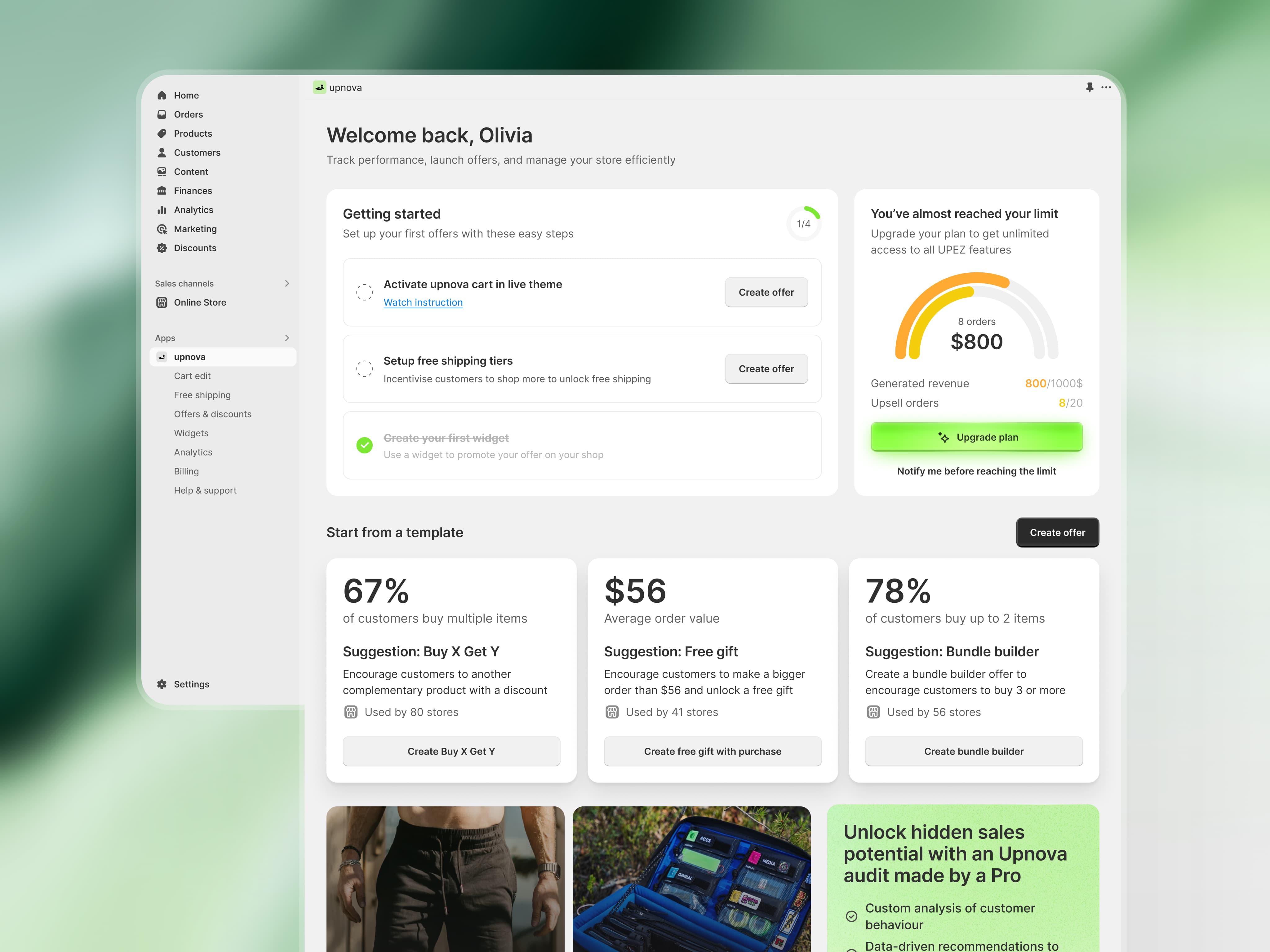
Upnova is a revenue platform for Shopify merchants. This redesign of its upsell app streamlines creation of in-cart and post-purchase offers for DTC stores. Targeting small- to mid-market sellers, the experience prioritises fast configuration, brand-fit widgets and demonstrable ROI. Core objectives: raise average order value and attach rate, reduce setup time, prevent discount/theme conflicts, and deliver reliable analytics for ongoing optimisation.
Services
UX/UI Design
UX/UI Design
Team
Founder, engineer
Founder, engineer
Year
2024
2024
Challenge
Merchants reported confusing setup, too many options, and no clear preview, leading to abandoned configurations and inactive offers. Discount and theme conflicts increased support load, and the UI lacked parity with Shopify Admin, eroding trust. With a tight delivery window and a need for platform consistency, the redesign adopted Shopify’s Polaris design system, reusing components and patterns to accelerate delivery and ensure familiarity, while creating a guided, brand-safe, analytics-led experience that turns first-time users into active upsell creators quickly.
Solution
To meet the tight deadline and ensure platform consistency, the redesign adopted Shopify’s Polaris components and Admin patterns end-to-end. We introduced a guided creation wizard with progressive disclosure, pre-built templates (BOGO, volume, free shipping) and an inline, theme-matched preview to cut confusion. A conflict checker surfaced discount/theme clashes before publish, while auto-activation prompts prevented “created but not live” issues. Contextual help, robust empty/error states and AA contrast improved clarity.
Outcomes
Time-to-first-offer reduced 42% (18 → 10 minutes) with a standard template setup time reduced 38% (12 → 7.5 minutes).
30-day merchant retention up 11 percentage points (54% → 65%), after three months, active merchants up 16%.
CSAT rose to 4.4/5 (from 3.8); NPS +12 points post-redesign.
Setup/activation tickets down 24% in the first 12 weeks.
Publish success rate up 18% (67% → 85%); “created-but-not-live” errors down 60%, and discount/theme conflicts down 45%.
Average order value up 14% across the pilot cohort.
Challenge
Merchants reported confusing setup, too many options, and no clear preview, leading to abandoned configurations and inactive offers. Discount and theme conflicts increased support load, and the UI lacked parity with Shopify Admin, eroding trust. With a tight delivery window and a need for platform consistency, the redesign adopted Shopify’s Polaris design system, reusing components and patterns to accelerate delivery and ensure familiarity, while creating a guided, brand-safe, analytics-led experience that turns first-time users into active upsell creators quickly.
Solution
To meet the tight deadline and ensure platform consistency, the redesign adopted Shopify’s Polaris components and Admin patterns end-to-end. We introduced a guided creation wizard with progressive disclosure, pre-built templates (BOGO, volume, free shipping) and an inline, theme-matched preview to cut confusion. A conflict checker surfaced discount/theme clashes before publish, while auto-activation prompts prevented “created but not live” issues. Contextual help, robust empty/error states and AA contrast improved clarity.
Outcomes
Time-to-first-offer reduced 42% (18 → 10 minutes) with a standard template setup time reduced 38% (12 → 7.5 minutes).
30-day merchant retention up 11 percentage points (54% → 65%), after three months, active merchants up 16%.
CSAT rose to 4.4/5 (from 3.8); NPS +12 points post-redesign.
Setup/activation tickets down 24% in the first 12 weeks.
Publish success rate up 18% (67% → 85%); “created-but-not-live” errors down 60%, and discount/theme conflicts down 45%.
Average order value up 14% across the pilot cohort.